
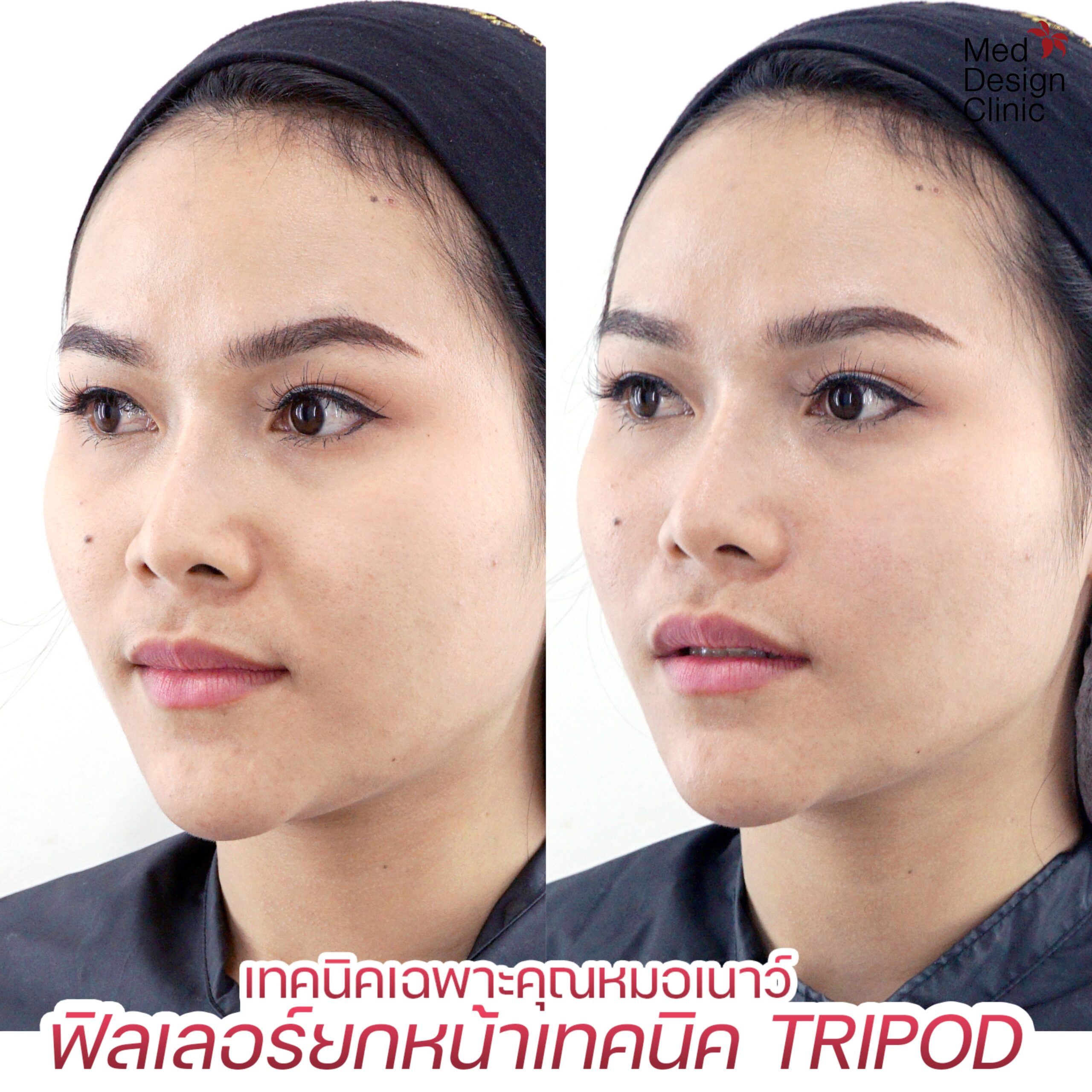
What are the methods for treating melasma and achieving smooth, clear skin? Is Pico Laser effective?
Melasma is often a problem that many people want to solve because it makes facial skin look uneven, dull, and difficult to treat if it's deep-seated. Currently, there are many ways to solve melasma, both in terms of external and internal skincare. But which method is appropriate, and how can melasma be prevented? This article has the answers.
“Melasma
Melasma is a condition characterized by dark patches on the skin, typically appearing as dark or brownish areas. It is most commonly found in individuals who frequently expose themselves to sunlight or have outdoor occupations. Additionally, melasma can develop in older individuals and is particularly prevalent in pregnant women and those undergoing hormone therapy or using contraceptive pills.
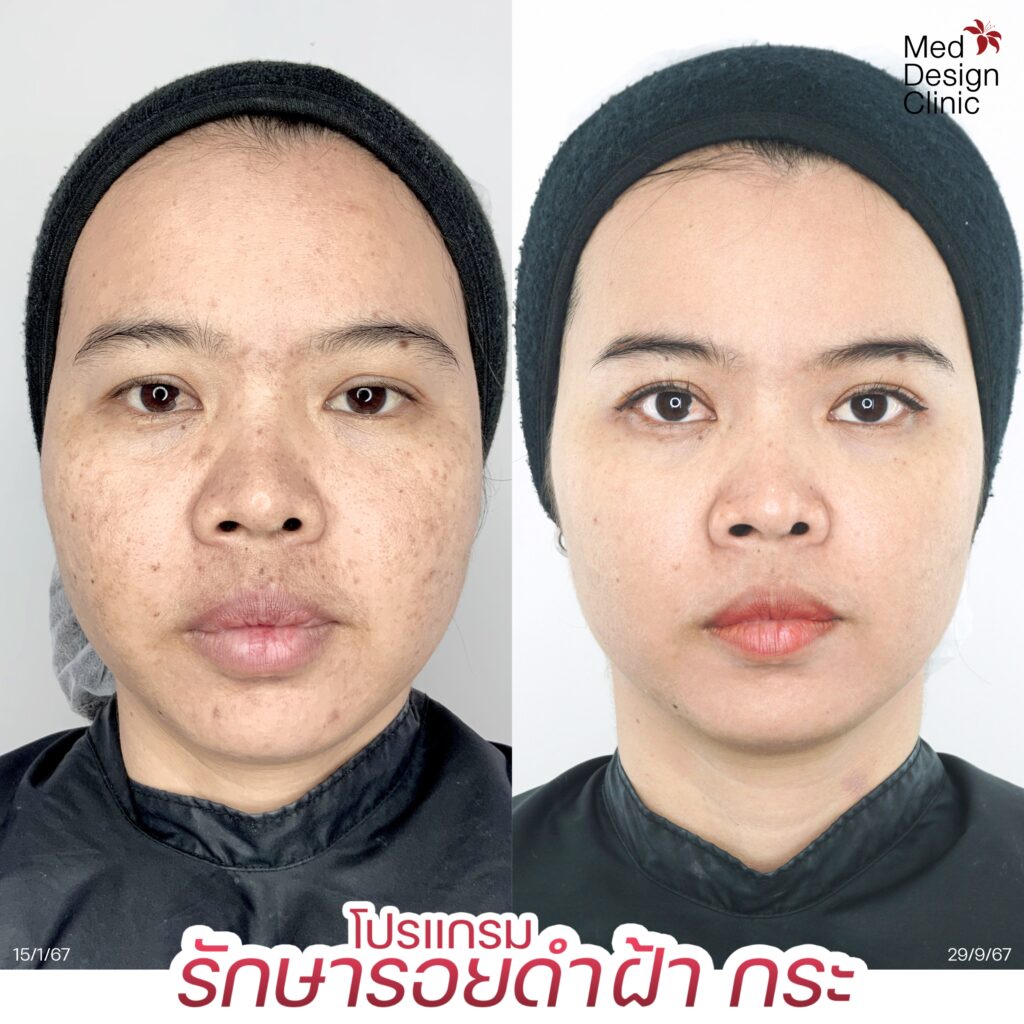
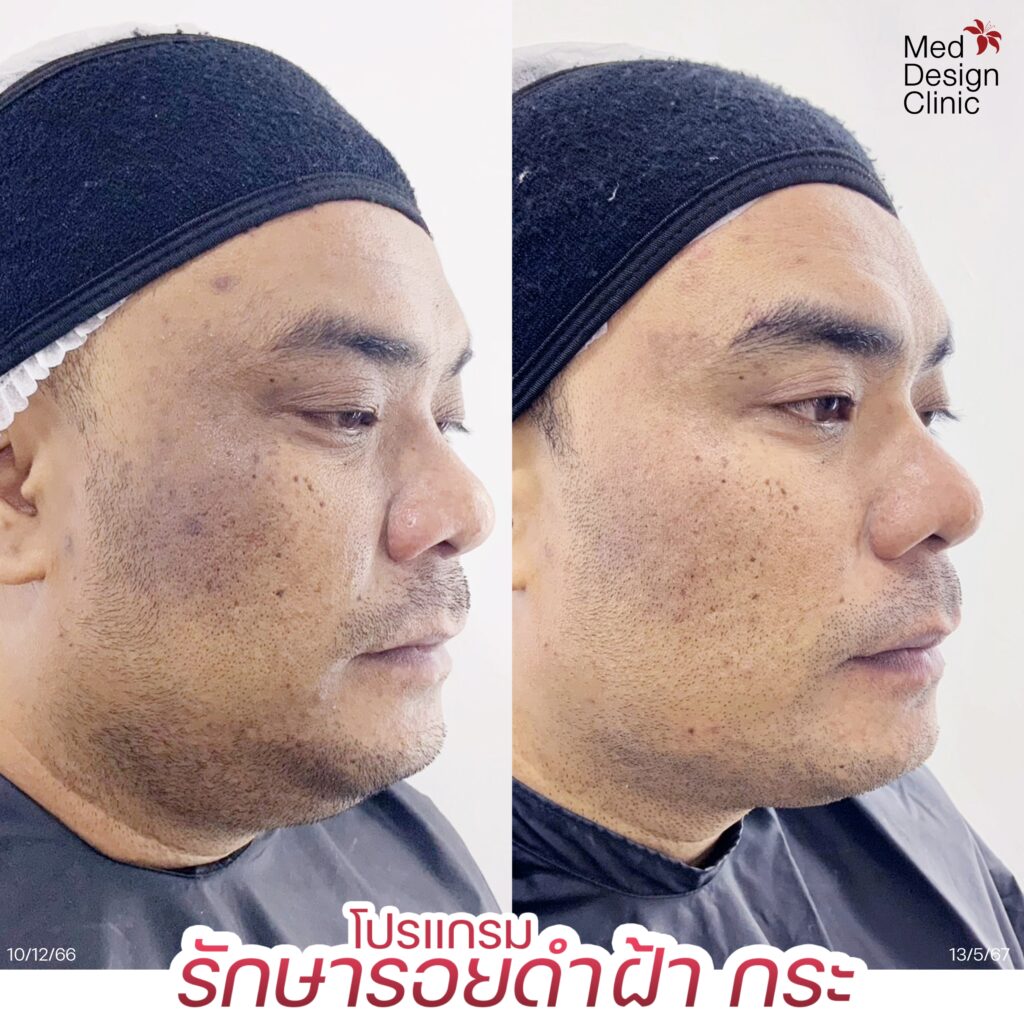
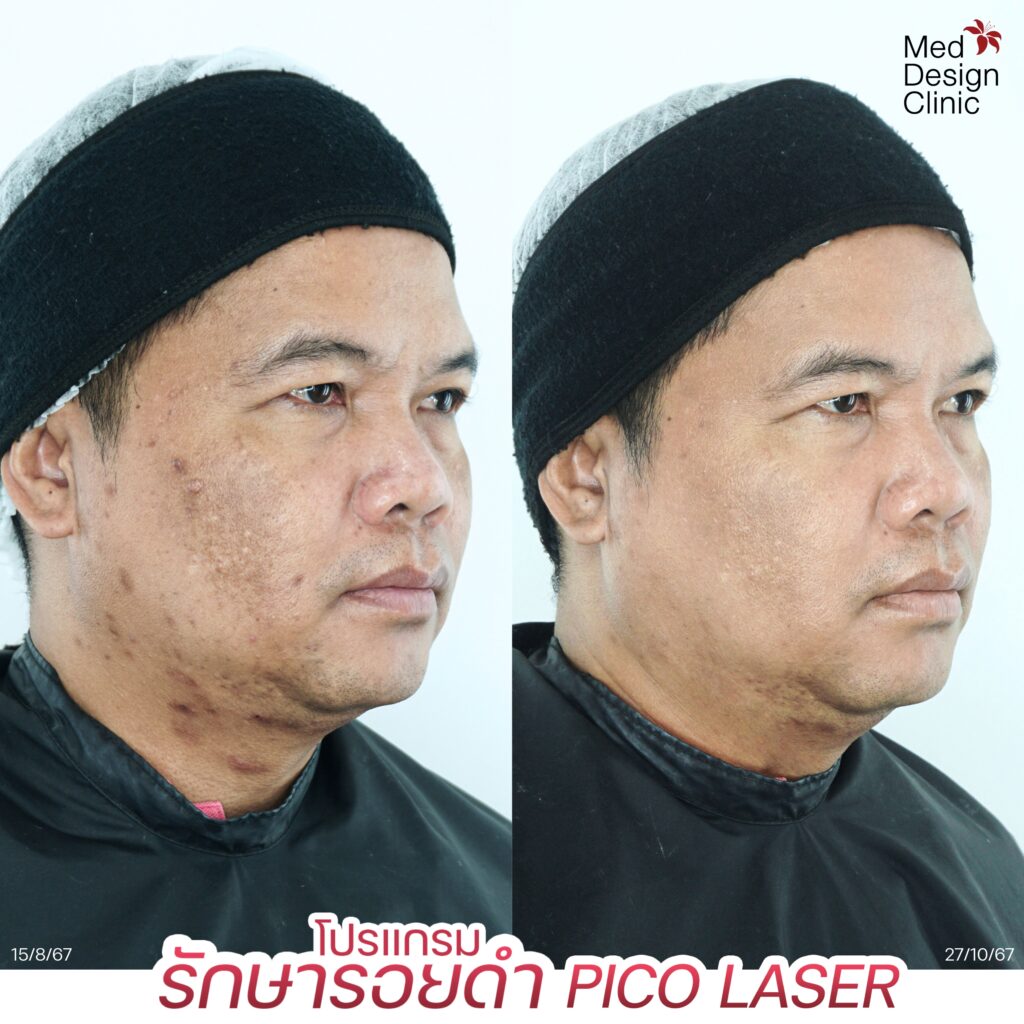
“What causes melasma? Causes of melasma.
Melasma is caused by the stimulation of melanin-producing cells located beneath the skin's surface. These cells produce melanin, a pigment that helps protect the skin from external stimuli such as sunlight, UV rays, heat energy waves, visible light, infrared radiation, and hormones. Melanin has a dark brown color, which outwardly manifests as what we call “melasma.” Melasma can be divided into several types, as follows:
- Blood vessels (Vascular Melasma (or Telangiectatic Melasma) presents with a diffuse, reddish-brown discoloration due to capillary abnormalities. It is most often caused by excessive use of cosmetics or medications containing steroids, as well as hormonal changes. It is more commonly observed in women than in men.
- Sun spots Caused by prolonged exposure to sunlight with UVA and UVB rays, making it easy to develop melasma.
- Superficial melasma (Epidermis Type) Found in the epidermis, it is easy to see the boundary of melasma.
- Deep melasma (Dermal Type) Occurs in the dermis layer beneath the epidermis. Characterized by brown to grayish patches with indistinct boundaries, able to spread over a wide area of skin.
- Mixed Melasma
What are the ways to treat melasma?
- Applying medication for melasma Helps reduce melanin production or destroys melanin by exfoliating the skin at high concentrations, prescribed by a doctor for close monitoring of side effects.
- Using skin brightening creams for melasma Use creams with whitening ingredients, vitamin C, and arbutin to fade melasma. It takes a long time for maintenance.
- Mesotherapy for a radiant faceDirect injection of vitamins and amino acids into skin cells helps reduce and fade melasma. This method takes less time than applying creams but requires regular and consistent injections for noticeable results.
- Laser treatment for melasma It is the direct transmission of energy waves to the target area, with results seen faster than other methods. It is suitable for people with deep melasma that is difficult to treat and is commonly treated with Pico Laser, Q-switch, and Dual Yellow lasers.
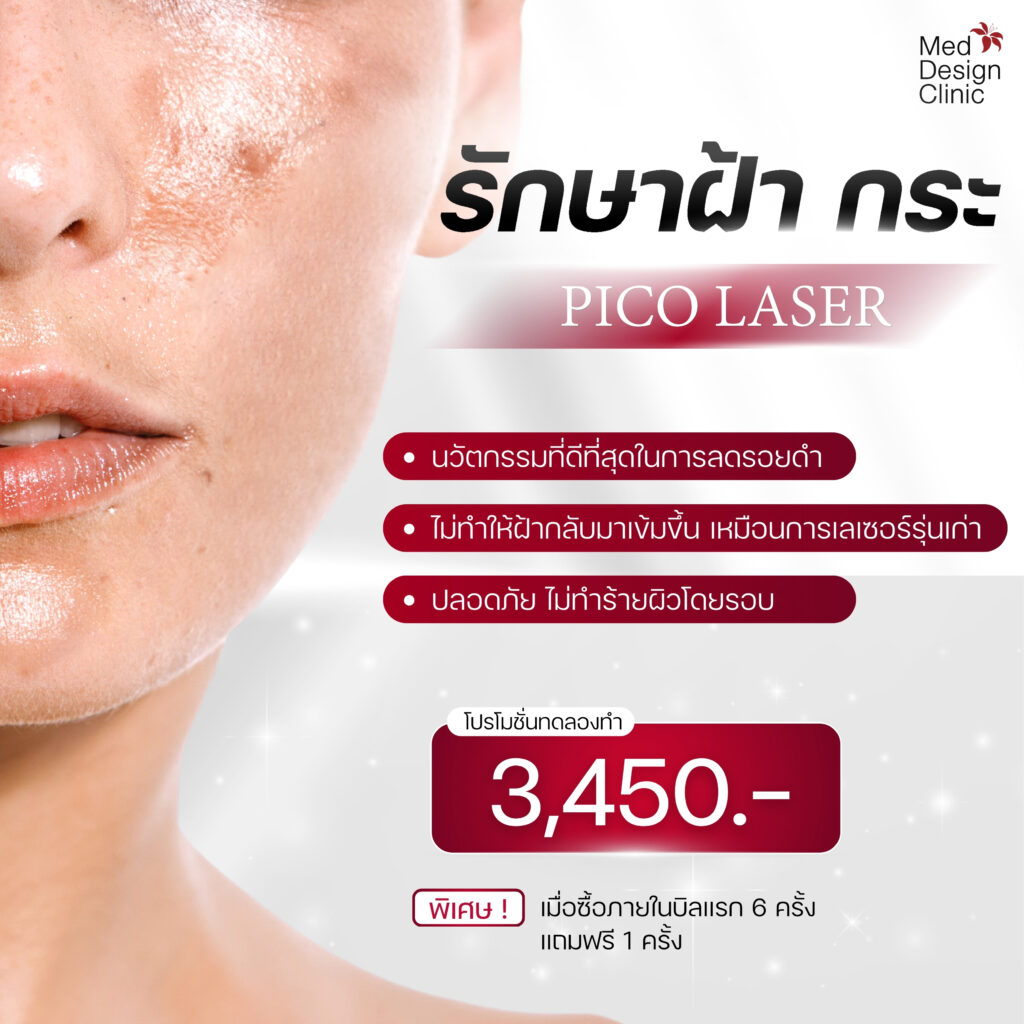
What is a Pico Laser?
Pico Laser is one of the popular laser treatments for melasma currently available. In addition to treating melasma, it also helps with freckles, acne scars, skin smoothing, reducing dark spots, resolving acne scars and blemishes, reducing melanin production on the skin, and brightening the complexion. It is a comprehensive procedure that can address various skin concerns.
How a Pico Laser Works
The Pico Laser emits energy at a special wavelength into the skin in areas with melasma that have a high amount of melanin. When the energy reaches the target area, it breaks down melanin pigments into fine particles, allowing the body to eliminate them quickly. Additionally, it can stimulate collagen production in the skin by using a Fractional Lens Array to concentrate the light, creating micro-bubbles on the skin known as LIOBs (Laser-Induced Optical Breakdown).Laser-Induced Optical BreakdownThis stimulates skin cells to regenerate, replacing and repairing gaps in the skin, making the skin smoother and finer.
Who is a Pico Laser suitable for?
- People with abnormal pigmentation problems, such as melasma, dark spots, and moles.
- Individuals with acne scars, dark spots, red marks from acne, and recurring acne scars
- Those with uneven skin texture and enlarged pores
- Those with uneven skin tone, dull skin, and dull facial complexion
- Those who want to remove tattoos
The benefits of Pico Laser
- Comprehensive skin problem care. In addition to melasma treatment, it also helps with other skin issues.
- Shorter treatment duration than other types of lasers.
- Less pain compared to other types of lasers
- Few side effects, short recovery time, low risk of scarring.
- It doesn't thin the skin because Pico Laser helps stimulate the creation of new skin cells, making the skin stronger.
Disadvantages of Pico Laser
- If the laser is used on the same area too many times, it can cause hypopigmentation, so it should only be done under the care of a doctor.
- There may be scabbing and spotting after the procedure, which will resolve on its own within 1-2 days. After the procedure, you should avoid sunlight and keep your face clean to prevent infection.
- Avoid direct sunlight and keep your face clean to prevent infection.
How many Pico Laser sessions does it take to see results?
In general, doctors typically recommend that patients undergo laser treatment for melasma.At least 4-6 times or more, and it must be done continuously and consistently. For good results
Summary
Melasma can be prevented by avoiding sunlight and applying sunscreen daily. If melasma occurs, it can be treated in several ways. Pico Laser treatment not only helps treat melasma but also improves the skin in many aspects, such as stimulating collagen production and making the skin smoother and brighter, with less pain and no long recovery time. During laser treatment, energy levels must be adjusted appropriately, so it should be done under the care of a doctor and at a standardized, reputable clinic.
